
WELCOME TO THE WILDCRAFTING WORKSHOP WINTER 2026!
The Winter Wildcrafting Workshop 2026 was held Sunday, March 8th at the Central Oregon Coast, from 10 am to 5 pm.
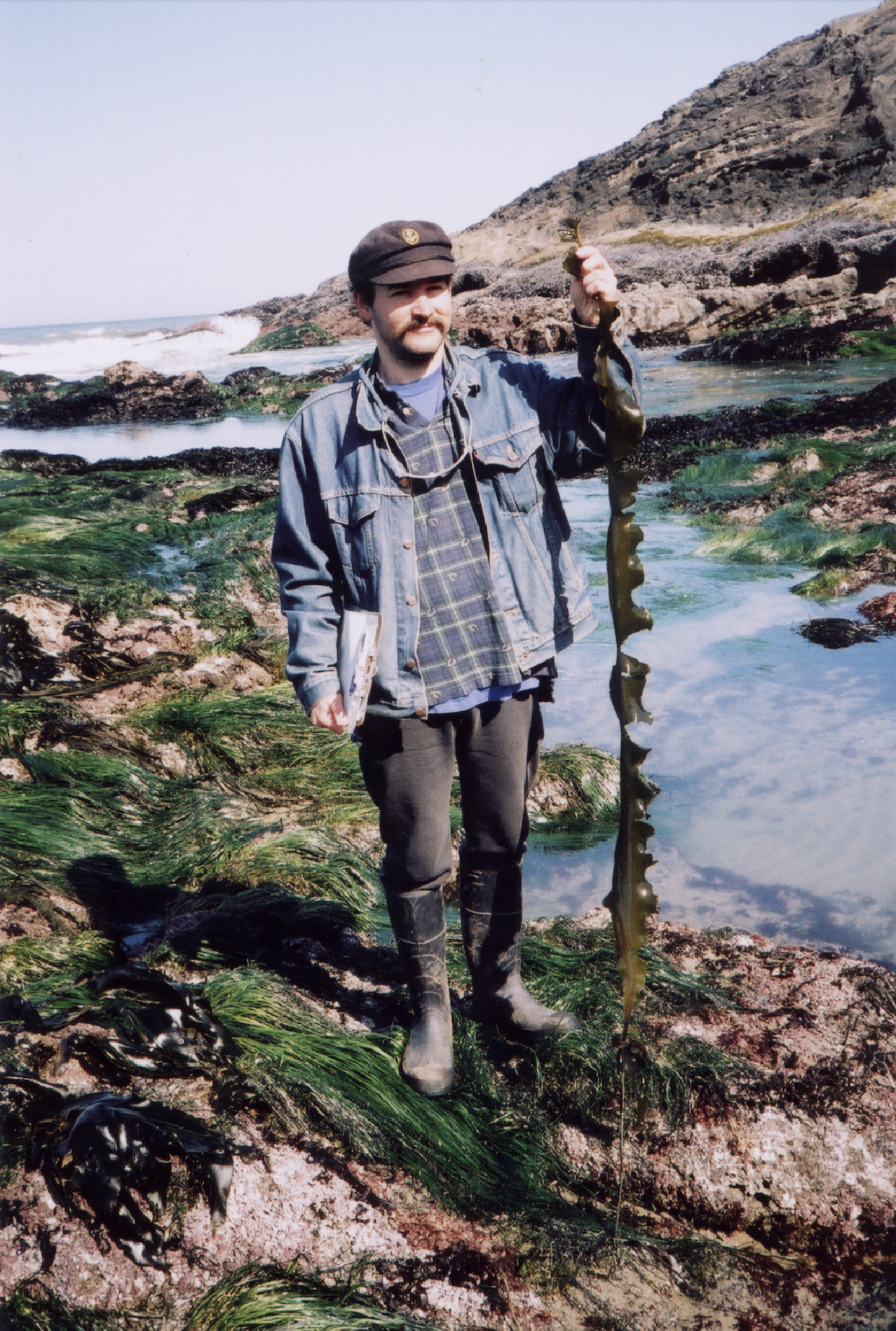
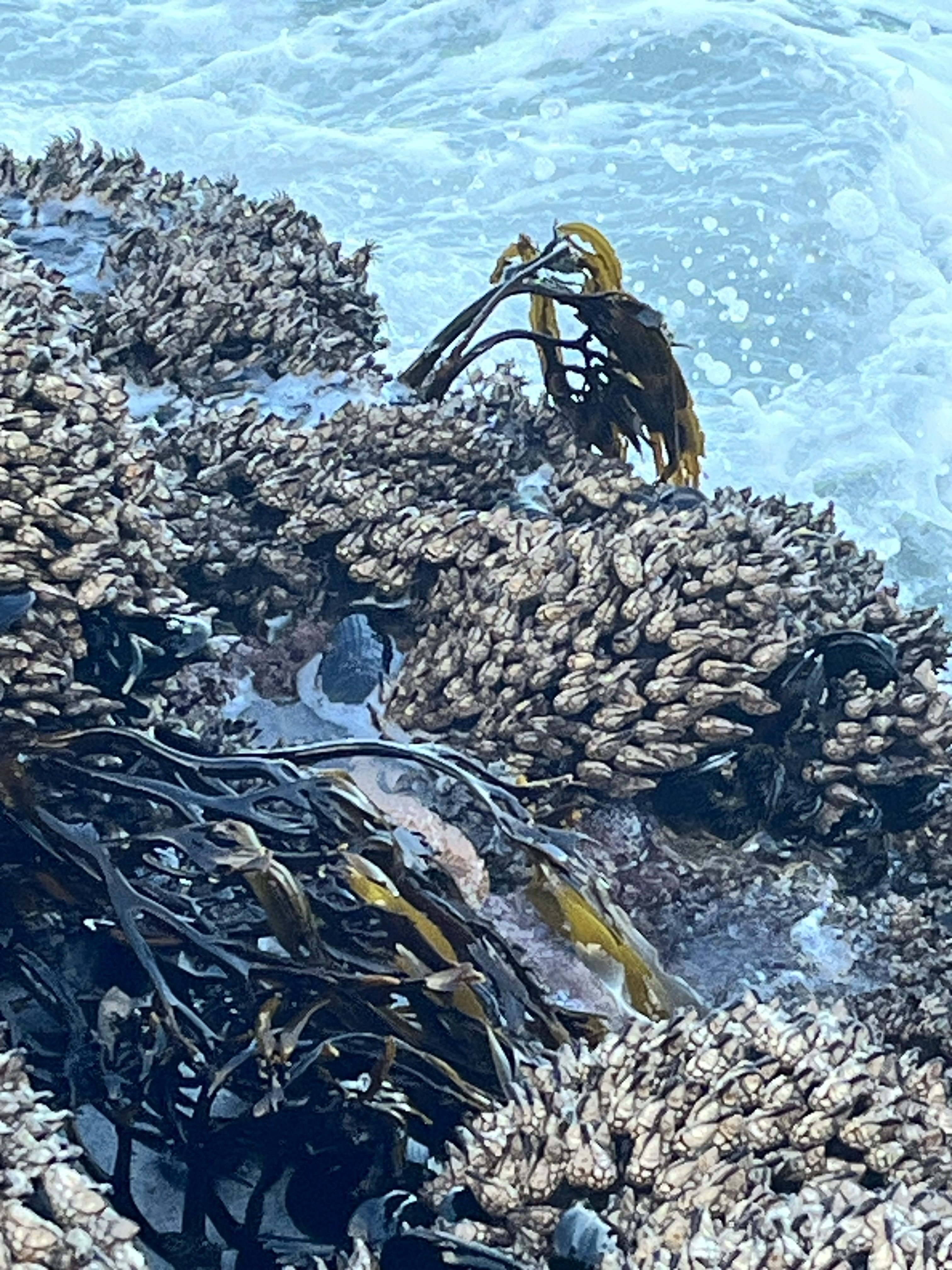
We spent part of the day checking out the magical rocky intertidal zone where the Weeds Of The Sea AKA Seaweeds live!
The tide was around 1 foot, peaking at approximately 10:30 am, so not an extreme low tide like we have during the summer, but still low enough to expose some interesting intertidal species.
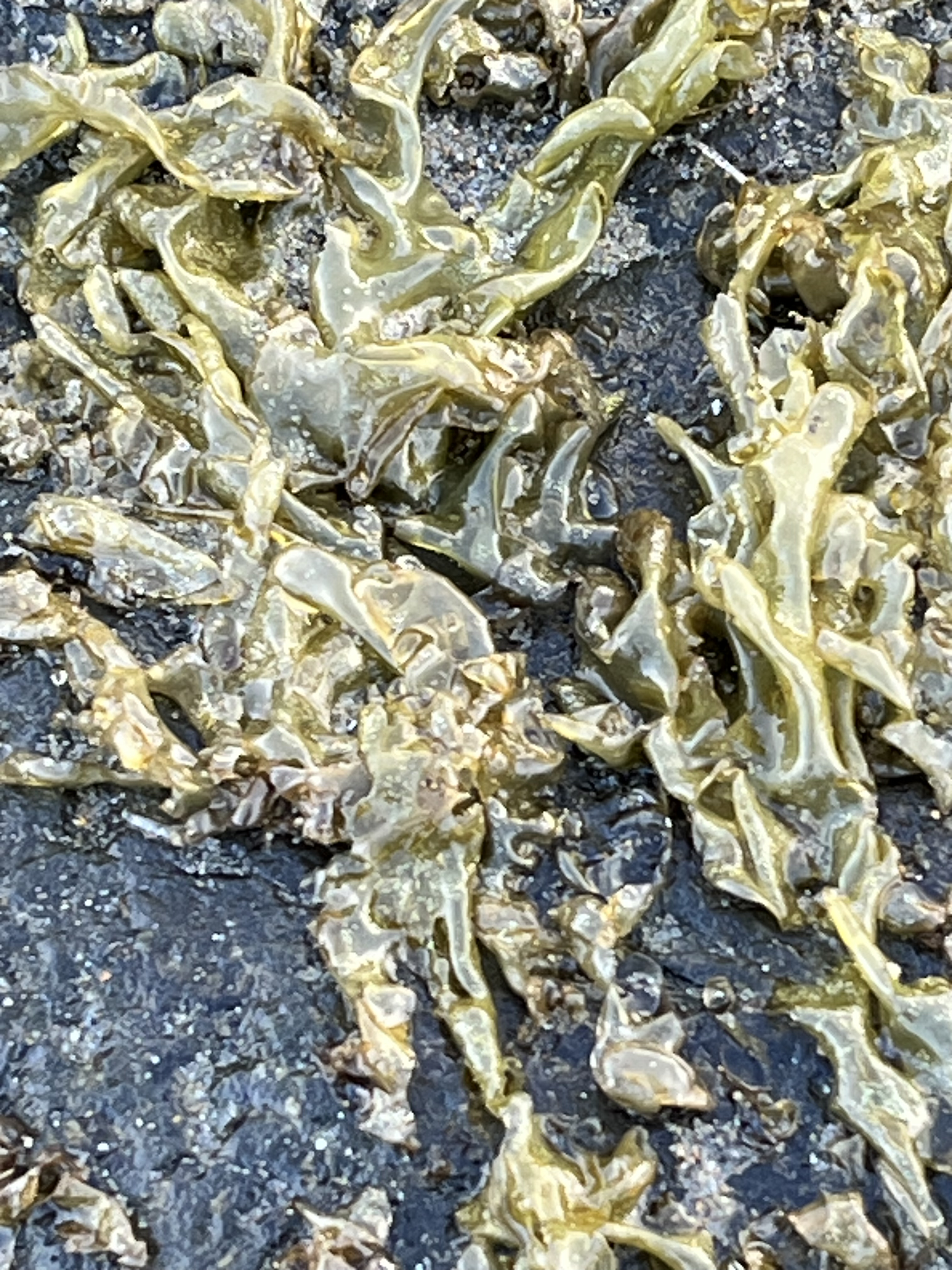
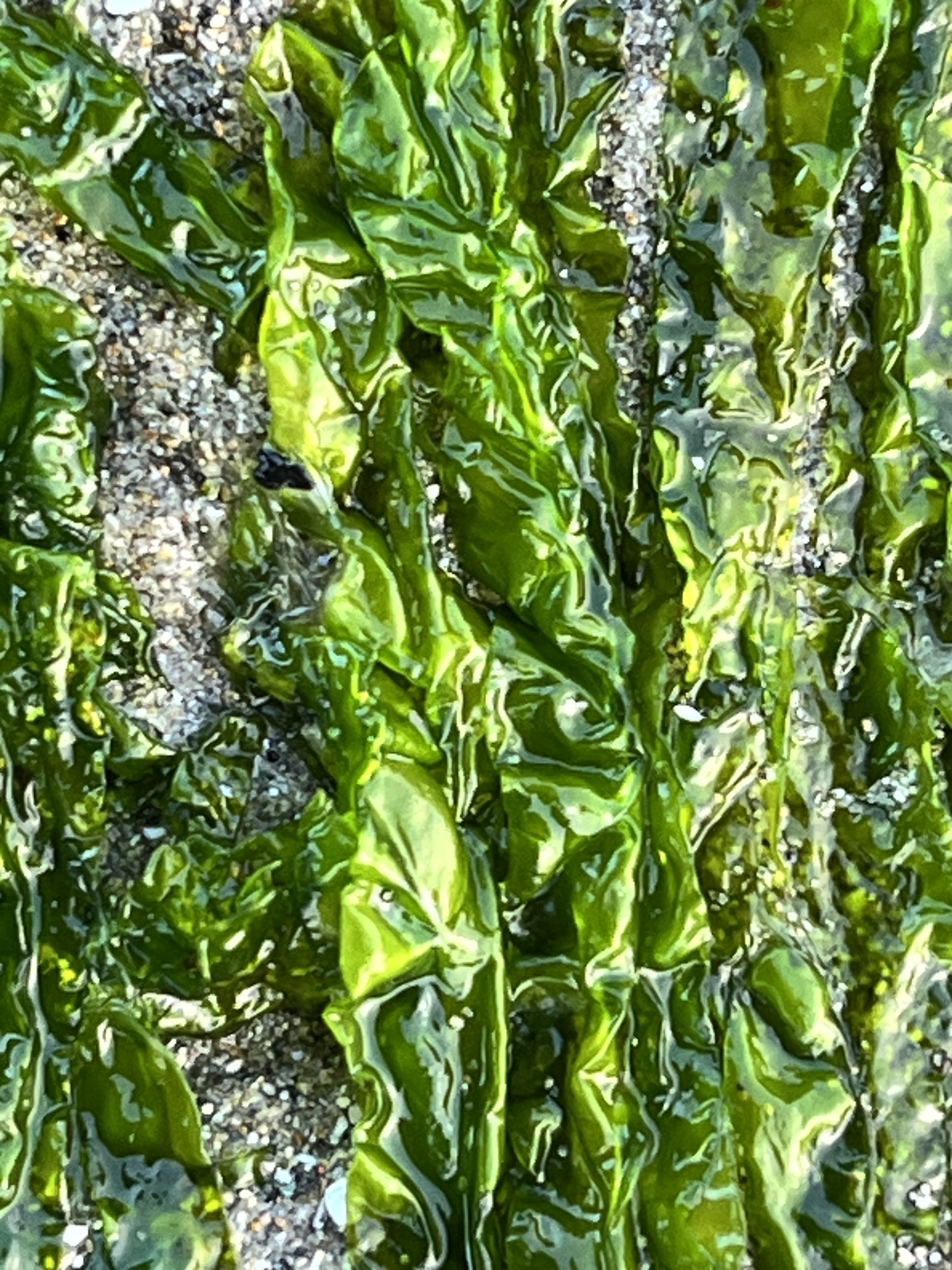
We checked out Nori (Pyropia spp. - formerly known as Porphyra) a Red Seaweed (even though it looked brown and green!) Nori is an important aquacultural crop that is grown along the Washington Coast and in parts of Asia (especially Japan.) Once harvested and dried, it is most commonly chopped and pressed into thin square sheets and used in sashimi and sushi. Nori is very high in protein, has a delicious "umami" flavor profile, and like all seaweeds is also high in minerals and vitamins!
Next we looked at a Green Seaweed Ulva intestinalis (formerly Ulva enteromorpha) with its skinny, tube-shaped growth pattern, it resembled part of the digestive tract - but fortunately tastes much better!
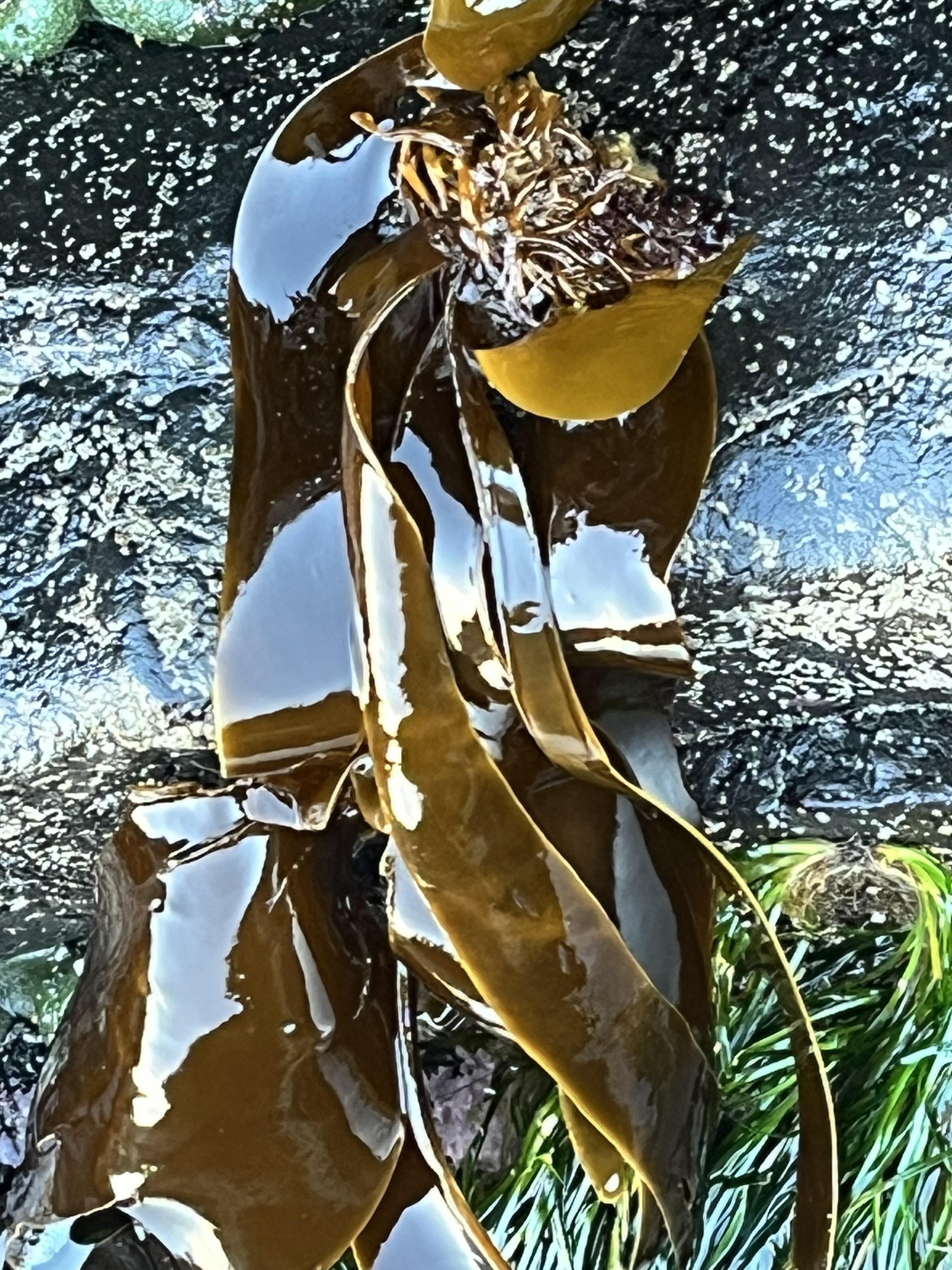
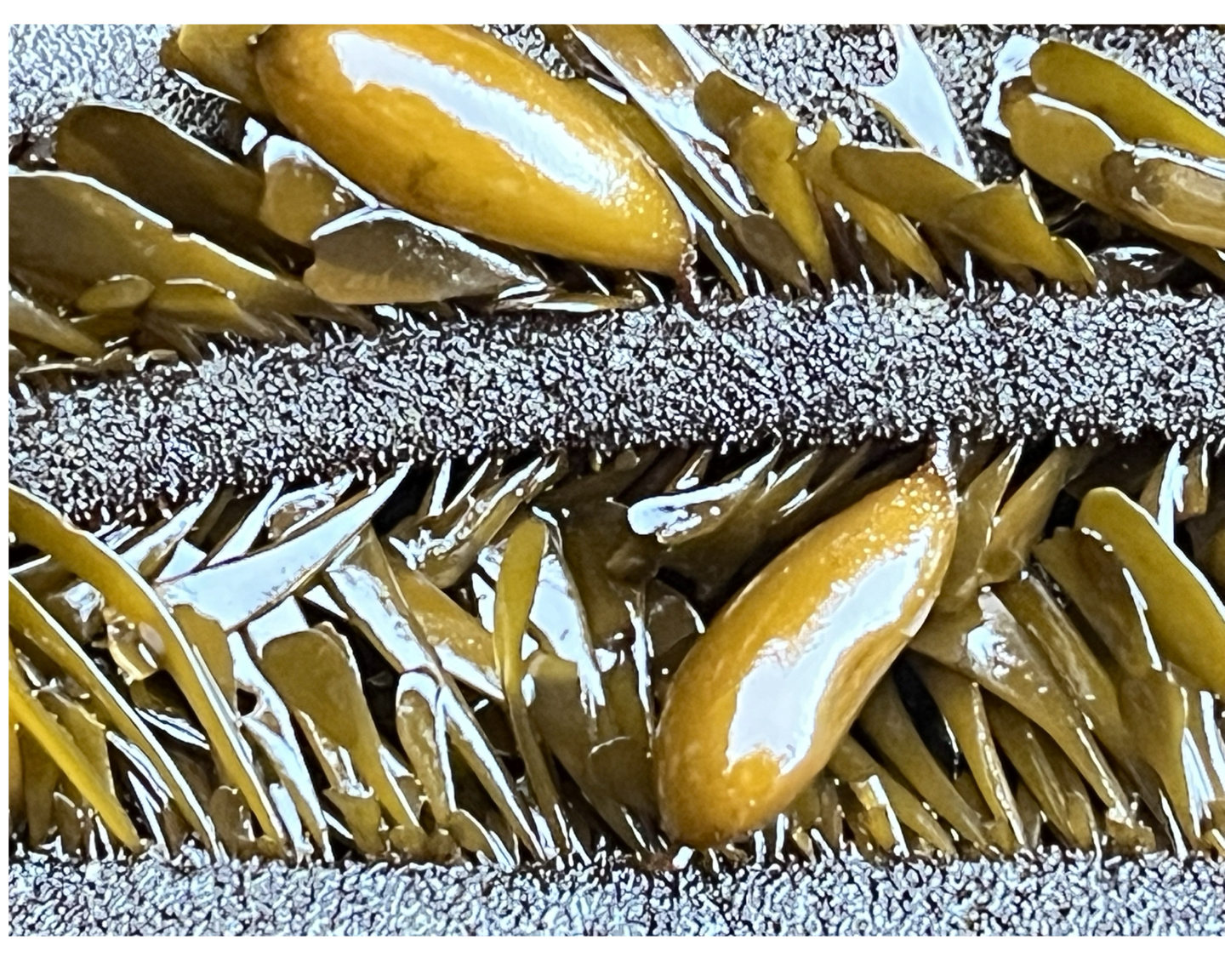
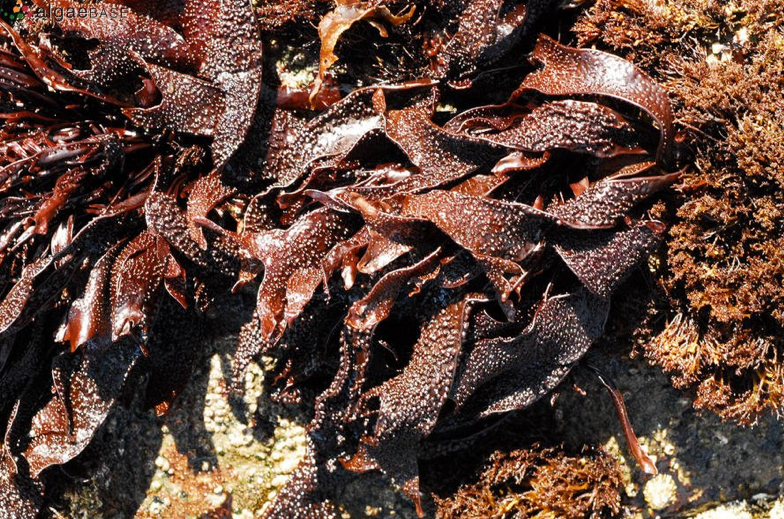
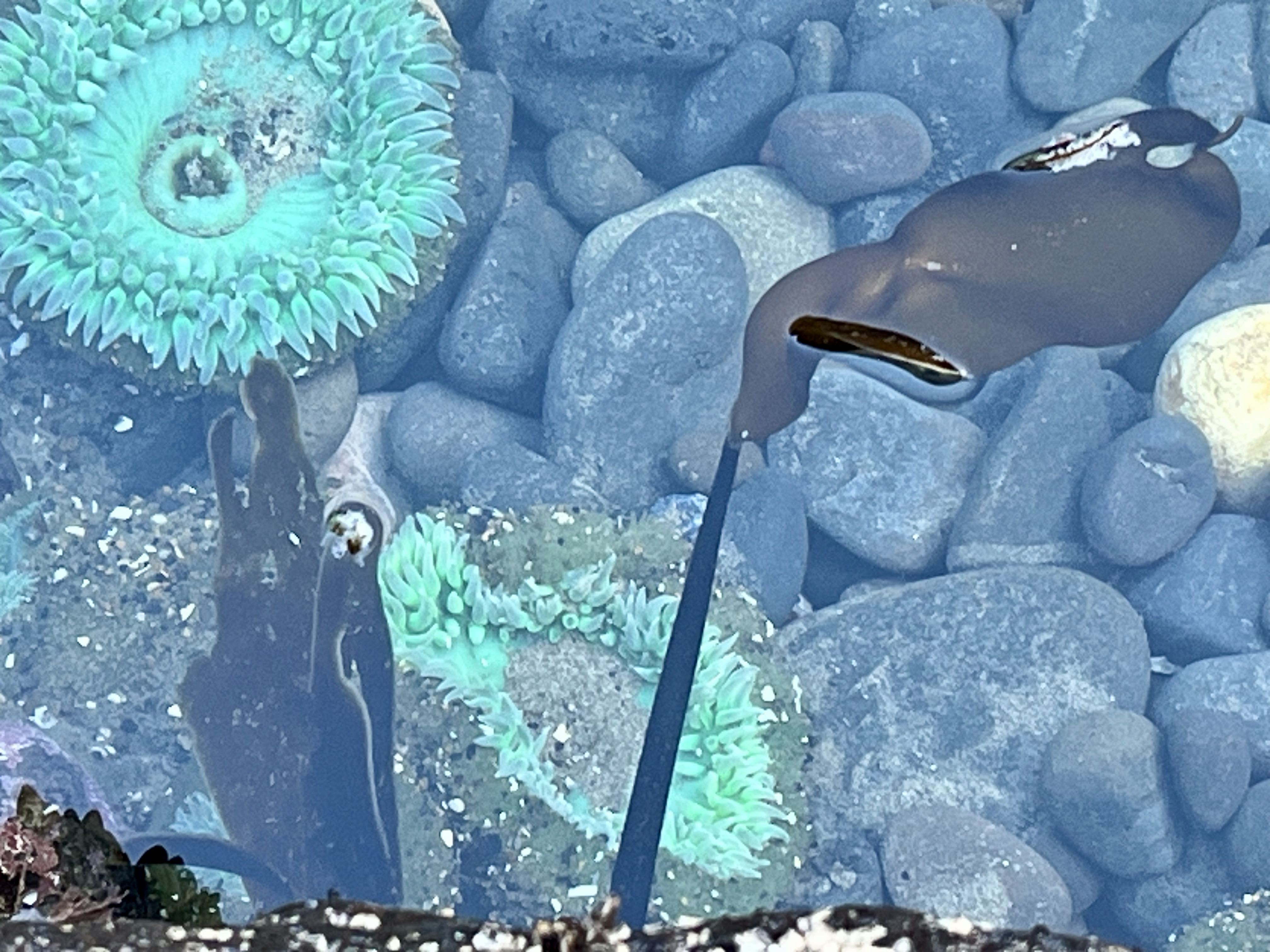
Then we found an active tide pool and collected our first seaweeds of the day! Sea Cabbage (Saccharina sessilis, formerly Hedophyllum sessile), Feather Boa (Egregia menzesii), and Grapestone (Mastocarpus papillatus). While students were collecting, I visited the subtidal zone and brought back some Kombu (Laminaria sinclarii) and some Wakame, or Winged Kelp (Alaria spp.) to share. Sea Cabbage and Feather Boa are both Brown Kelps, while Grapestone is another Red Seaweed. Kombu and Wakame are also delicious Brown Kelps.
Sea Cabbage is a thick, strap-like plant whose wide blade attaches directly to its holdfast. Feather Boa has a long central midrib which supports bladelets and small floats on either side of its belt-like frond which help keep it floating near the surface to more easily photosynthesize. Grapestone had a pebbly texture to its blade and was mostly small and compact compared to its neighbors. Loaded with gels like carageenan and alginates, extracts from Grapestone have extensive uses as thickening agents, emulsifiers, and nutritive compounds.
We chewed up the brittle stem and gooey blade of our Kombu in a semi-successful attempt to blow bubbles with its highly gelatinous properties. We marveled at the fascinating structure of the Wakame / Winged Kelp with its distinctive paddle-like reproductive structures called sporophylls (the "wings"!) and long graceful blade that can grow up to a foot a day during the peak summer growing season! Also called "Honey Ware" it is loaded with complex carbohydrates giving it a distinctive sweet-savory flavor that is prized among collectors.
Next we found another, calmer tide pool where there was some Bleachweed also called Prionitis spp. growing. As we all sampled a few blades with their crispy crunchy texture, we talked about its ability to fight off the Herpes Family of viruses in our bodies and remembered its Genus name by singing a lyric from a famous Eagles song: "You can't hide your prionitis!" [SEE VIDEO BELOW]
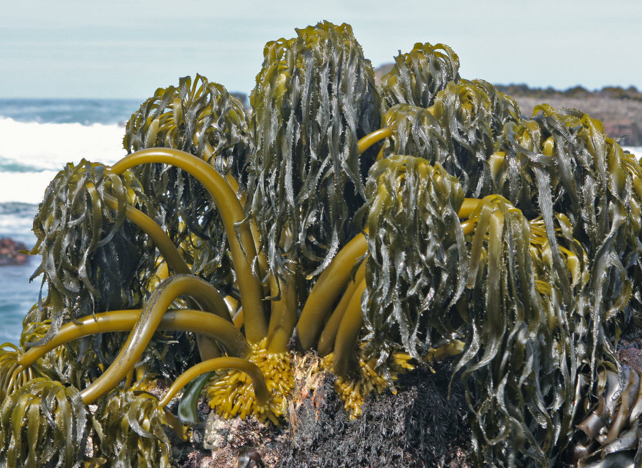
The braver ones among us ventured out to the very edge of the rocks to try and locate a very special brown kelp that is only for admiring not collecting (unless you are lucky enough to find some freshly washed up on the shore!) called Sea Palm aka Postelsia palmaeformis, which loves to grow only where the surf is the most ferocious, as if daring the waves to wash it away!
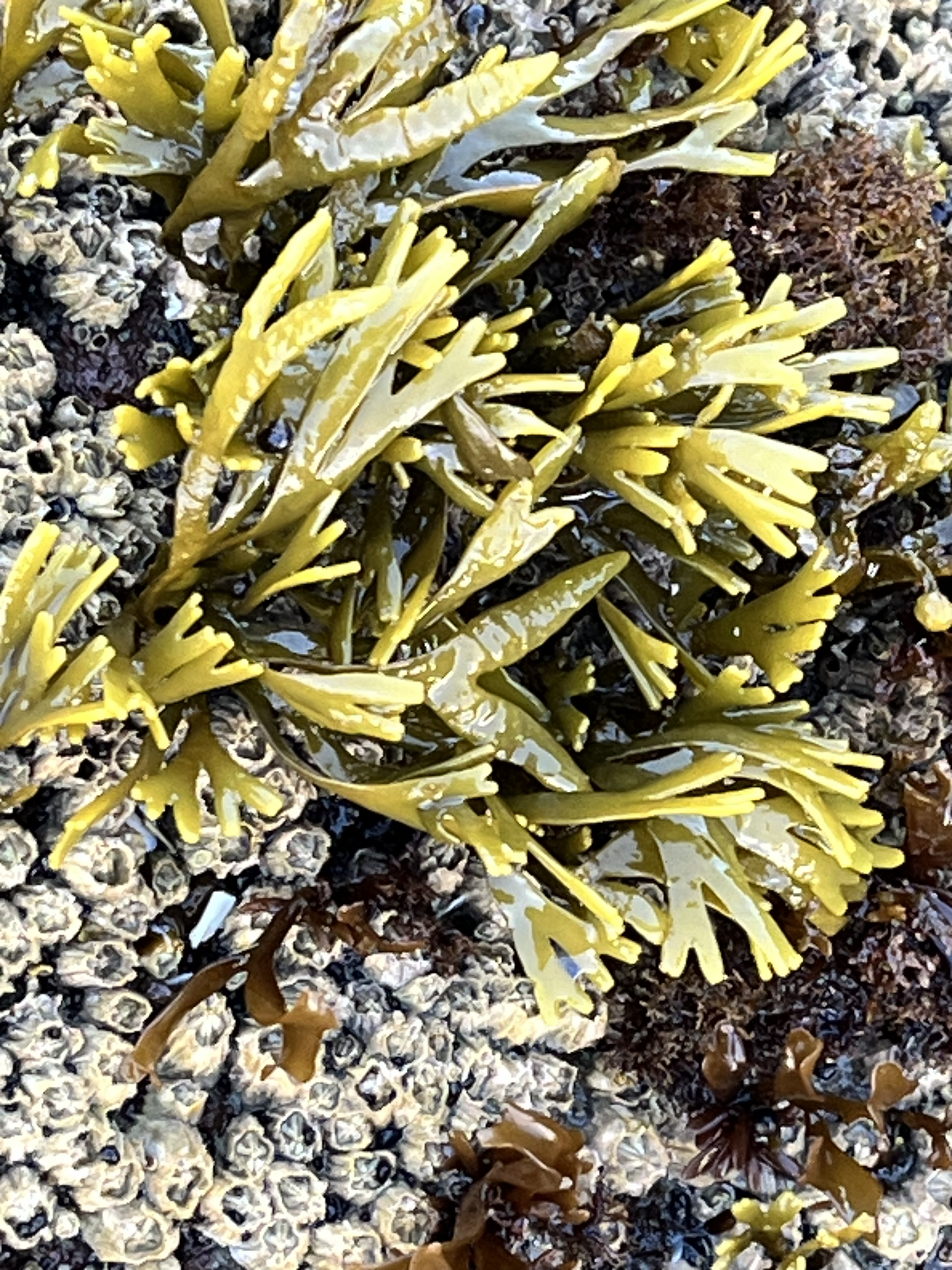
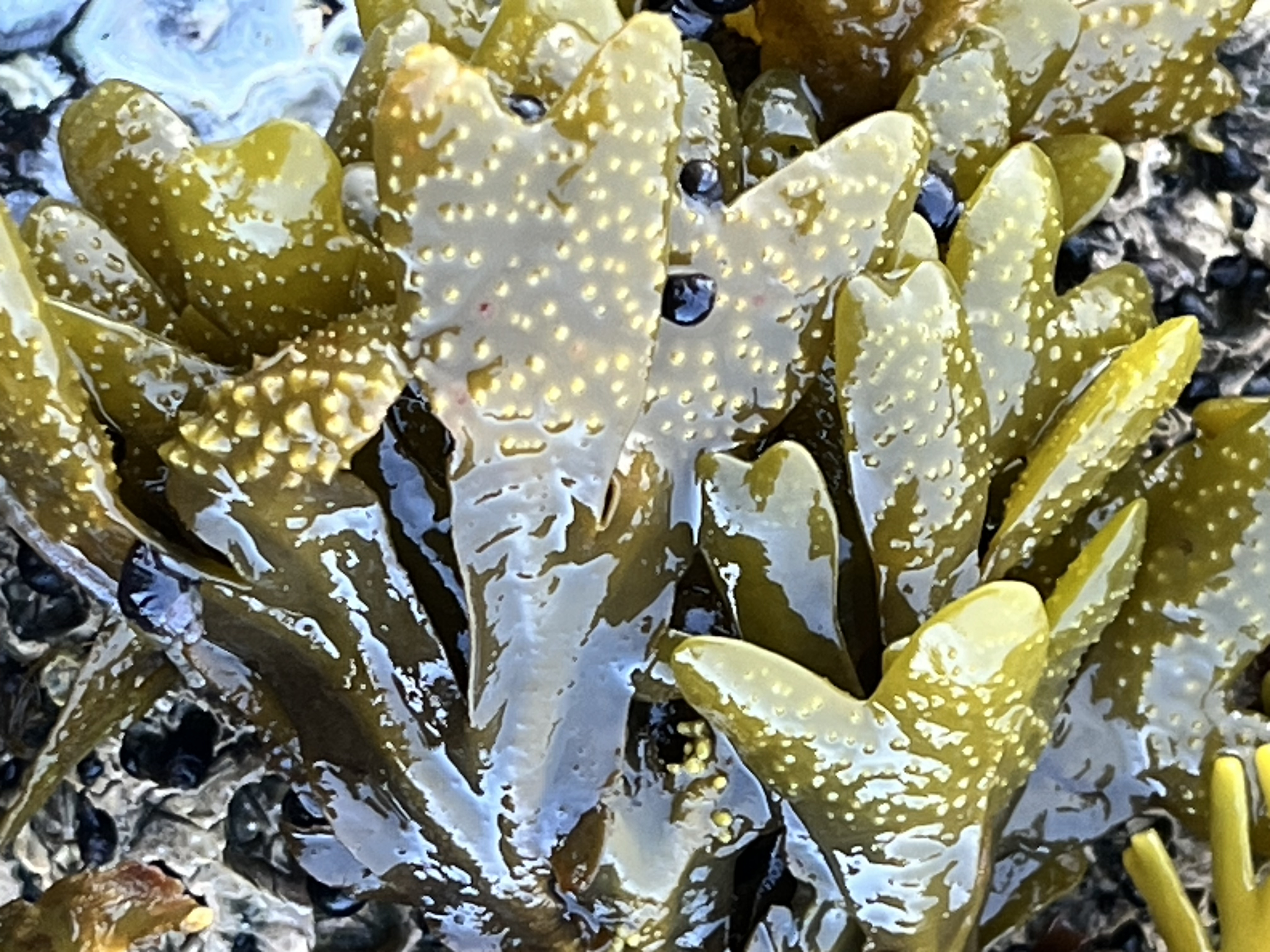
Finally, we collected some compact "Peace Seaweed" (Pelvetiopsis limitata) on the furthest reaches of the intertidal zone followed by some medicinally significant Bladderwrack (Fucus gardnerii) which we made into an alcohol tincture! With its significant amount of iodine and other supportive constituents, Bladderwrack has traditionally been used to support thyroid function, while it is typically contraindicated in overactive thyroid conditions.
Stay tuned for the Winter WC Workshop 2026 Part 2: Exploring The Land-Based Plants, coming soon!